

 EN
EN
 ES
ES CN
CNPRODUCTS
Tube Fittings
PRODUCTS
Tube Fittings
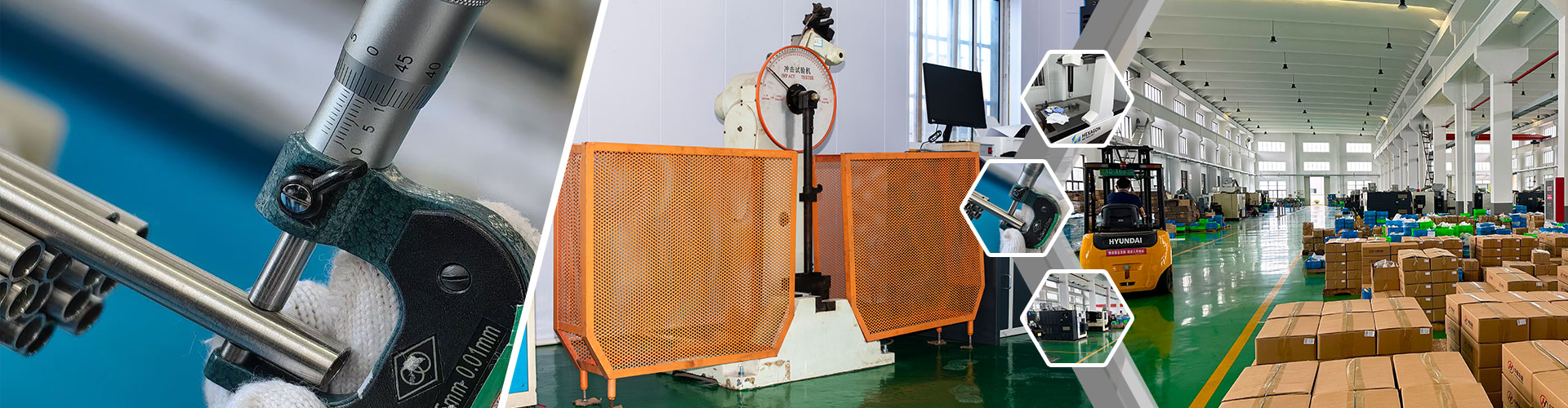
Recently, in response to the on-site requirements of a customer project in Inner Mongolia, XIPUTEC dispatched an engineer to the customer’s site to carry out on-site maintenance, component inspection, replacement, and system commissioning of a safety valve gas test system. The equipment is mainly used for sealing performance testing and leakage rate inspection of safety valves under air and other gas media conditions, and is an important part of the customer’s valve testing process.
As a critical protection component in pressure systems, the sealing performance and leakage rate of a safety valve are directly related to equipment safety and product reliability. Especially in gas testing applications, pressure control, gas circuit sealing, piping connections, test fixture stability, and control system response all affect the accuracy and consistency of the final test results. Therefore, this on-site service was not a simple replacement of a single component, but a comprehensive inspection, maintenance, and commissioning process based on the actual operating condition of the customer’s existing equipment. The work covered the pressure monitoring system, gas pipelines, control unit, actuators, and test fixtures.
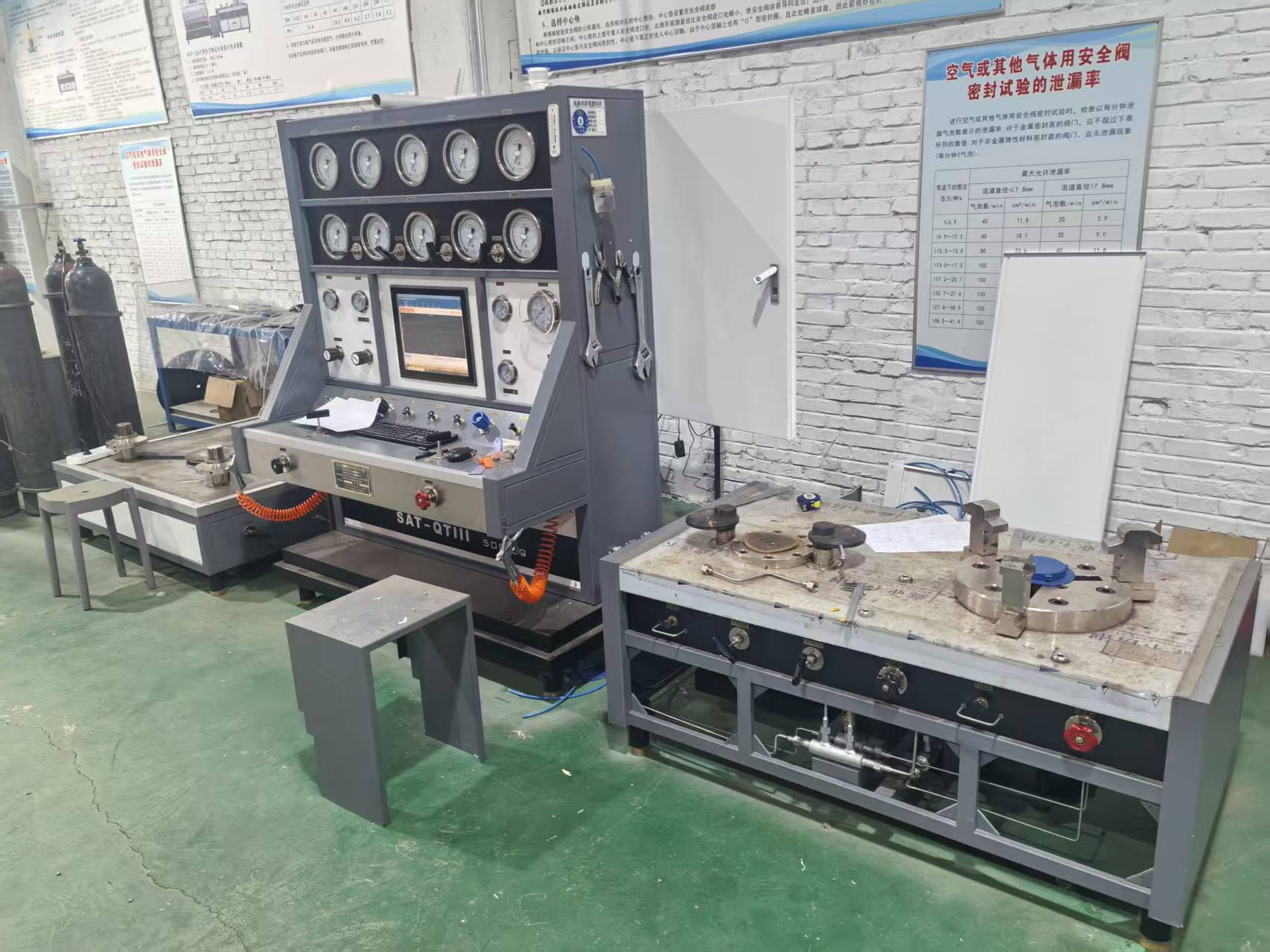
The engineer visited the customer site in Inner Mongolia to carry out on-site maintenance, component inspection, and system commissioning of the safety valve gas test equipment. The system consists of a control console, pressure monitoring unit, gas circuit system, and test fixture platform, and is used for safety valve sealing performance and leakage rate testing.
From the on-site equipment structure, the front of the test system integrates multiple pressure gauges, a control screen, pressure regulating components, and operating buttons, allowing operators to observe pressure changes at different points during testing and perform the required pressure control and test operations. The test platform area is equipped with different types of fixtures and connection interfaces to meet the installation, clamping, and testing requirements of safety valves with different specifications.
During this maintenance service, the engineer first inspected the overall operating condition of the equipment, including pressure indication, control response, gas circuit connection status, and the matching condition of the test platform fixtures. Based on the inspection results, selected connection components, pipeline interfaces, and control elements were repaired, replaced, and reconnected to ensure that the equipment could meet subsequent testing requirements.
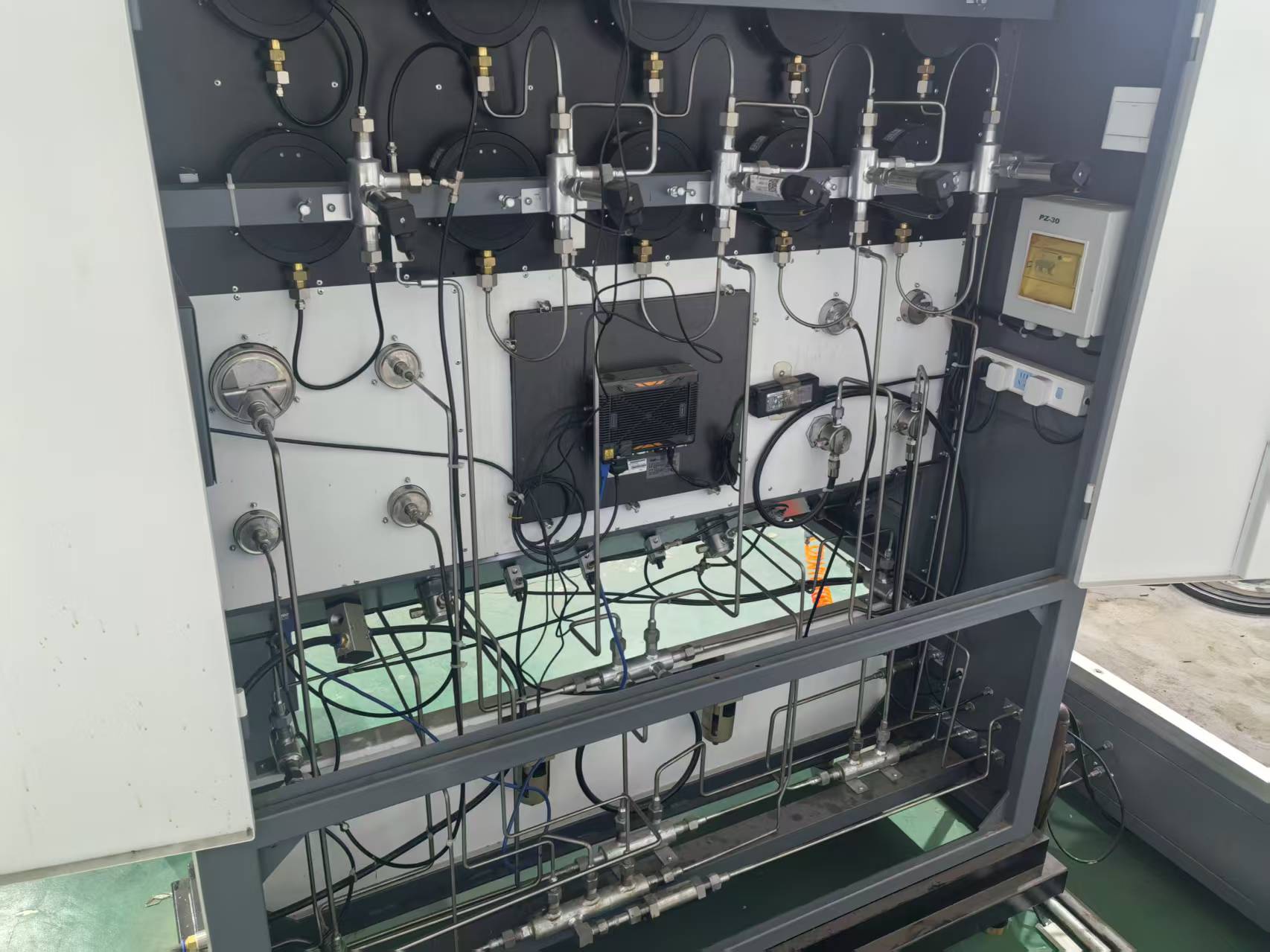
The rear maintenance area of the equipment was opened for step-by-step inspection of multiple stainless steel pipelines, fittings, valves, hoses, and control components. Selected connection components were repaired, replaced, and reconnected to ensure stable operation of the gas circuit system.
The rear section of the equipment is an important area of the gas test system, where multiple pressure transmission lines, control valve groups, hose connections, and related control components are arranged. For safety valve gas test equipment, the sealing performance and connection reliability of the rear piping system directly affect pressure stability during testing.
During on-site maintenance, the engineer focused on checking the routing of stainless steel pipelines, fitting connection status, valve interfaces, hose aging conditions, and pressure transmission circuits. For potential issues such as loosened connections, aged interfaces, or inconvenient maintenance that may occur during operation, the engineer carried out necessary treatment and adjustments. As a result, the gas flow path became clearer, and future maintenance and troubleshooting became more convenient.
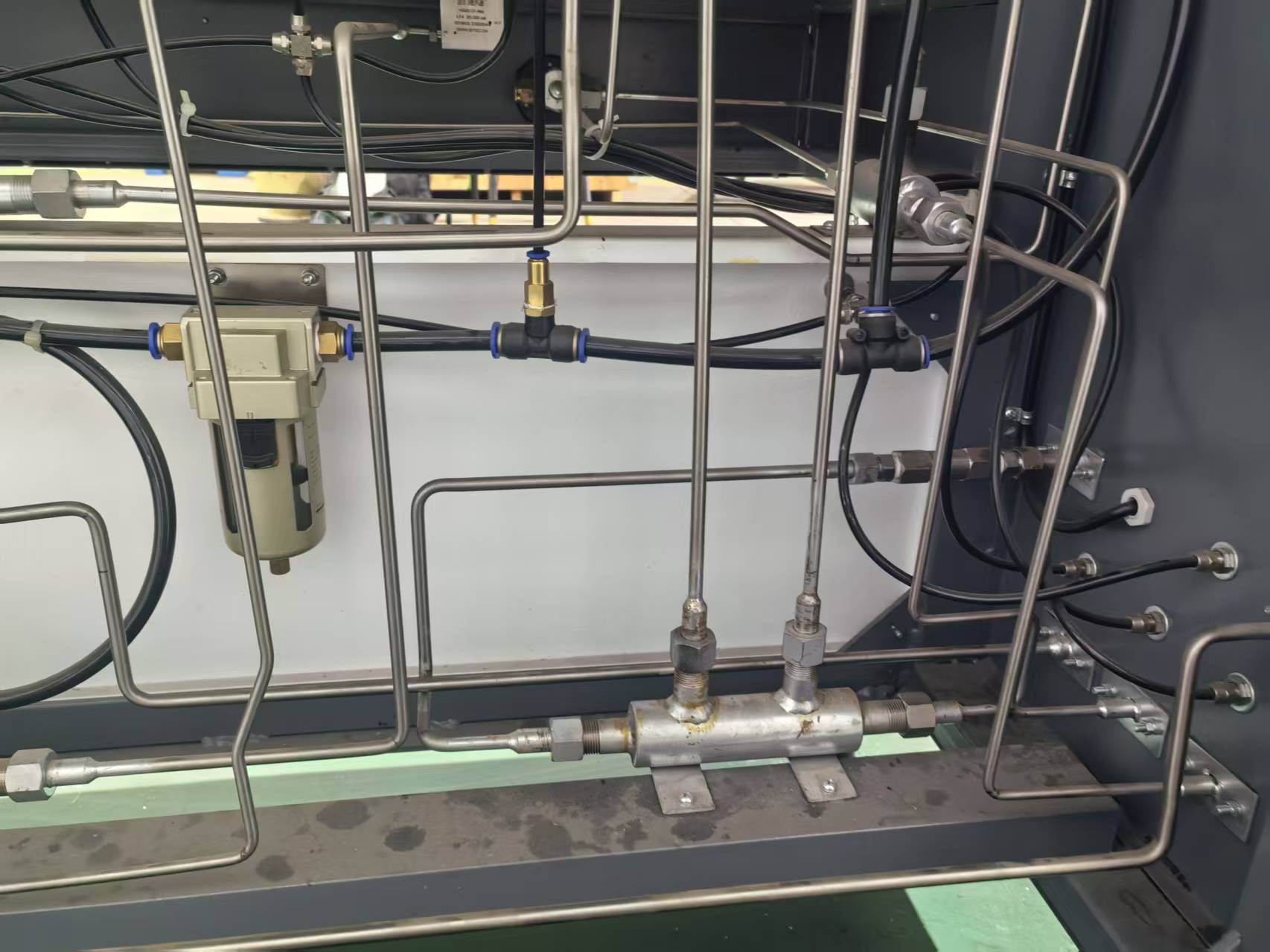
During the maintenance process, the engineer focused on inspecting the gas distribution manifold, fitting connection positions, and hose interfaces. Areas with potential aging or unstable connection risks were addressed to further confirm the sealing performance and pressure transmission reliability of each test channel.
The gas distribution area is an important part of the equipment for pressure transmission and channel switching. As shown on site, multiple stainless steel pipelines, pneumatic hoses, and fittings are arranged in this area, and stable and clear connections must be maintained between different test channels.
The engineer inspected the pipeline connection points, fitting sealing conditions, and gas circuit interfaces one by one, and reorganized and maintained selected connection positions. Through inspection and maintenance of the local piping system, the risk of leakage during testing can be reduced, while equipment stability during pressurization, pressure holding, and pressure release can be improved.
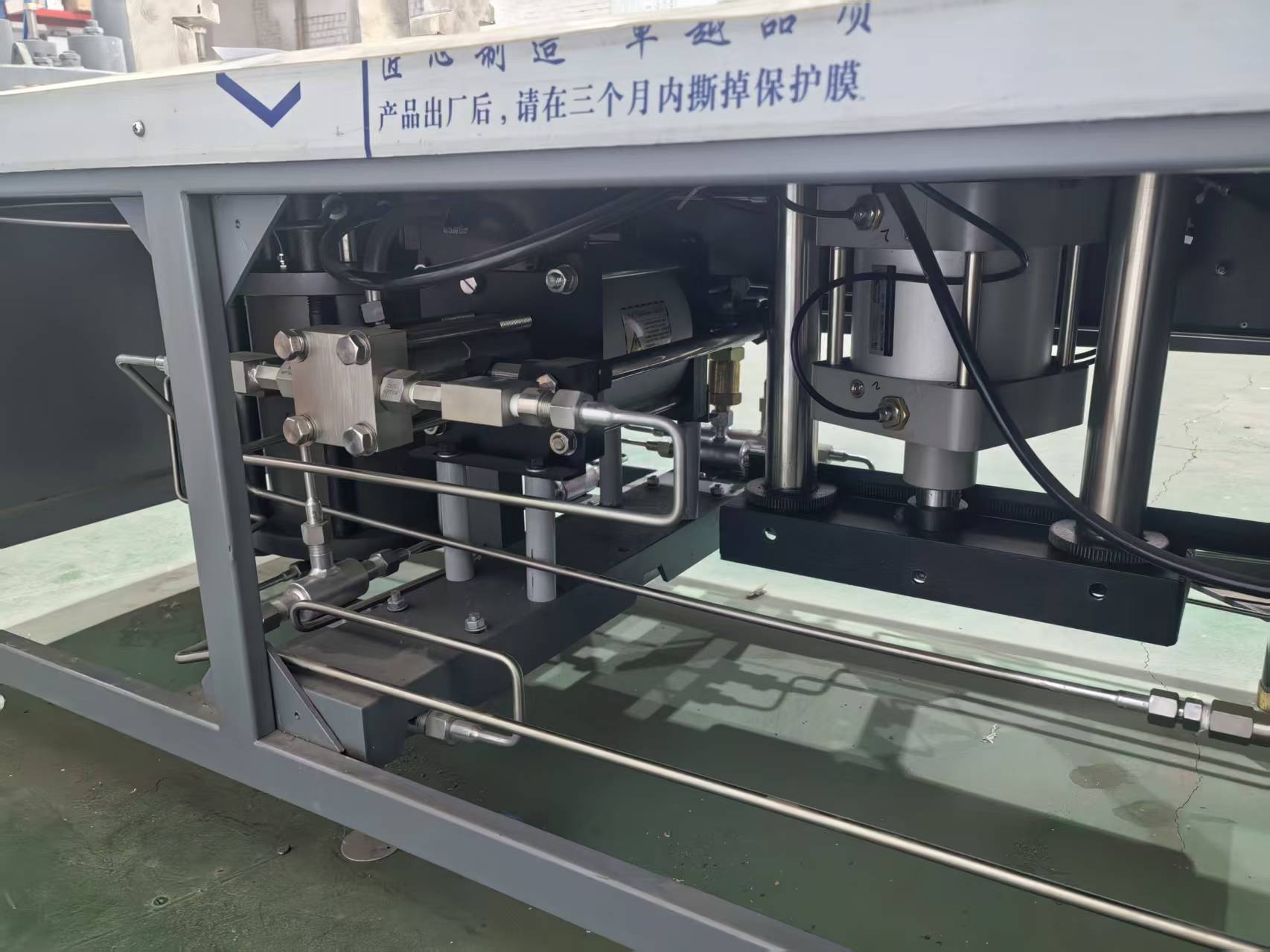
The engineer inspected and maintained the actuators, connection pipelines, and fixing structure below the test platform to confirm that the safety valve can remain stable during installation, clamping, and testing.
Actuators, connection pipelines, and supporting structures are arranged below the test platform. This section is an important part of safety valve clamping, pressure transmission, and motion control during testing. The mechanical stability and piping connection status of this area directly affect installation reliability and sealing performance during safety valve testing.
During the on-site service, the engineer checked the actuator operating condition, connection pipelines, fixing structure, and related interfaces, and adjusted the areas that required maintenance. Through repair and confirmation of this section, the equipment can provide a more stable installation base and operating condition for future testing of safety valves with different specifications.
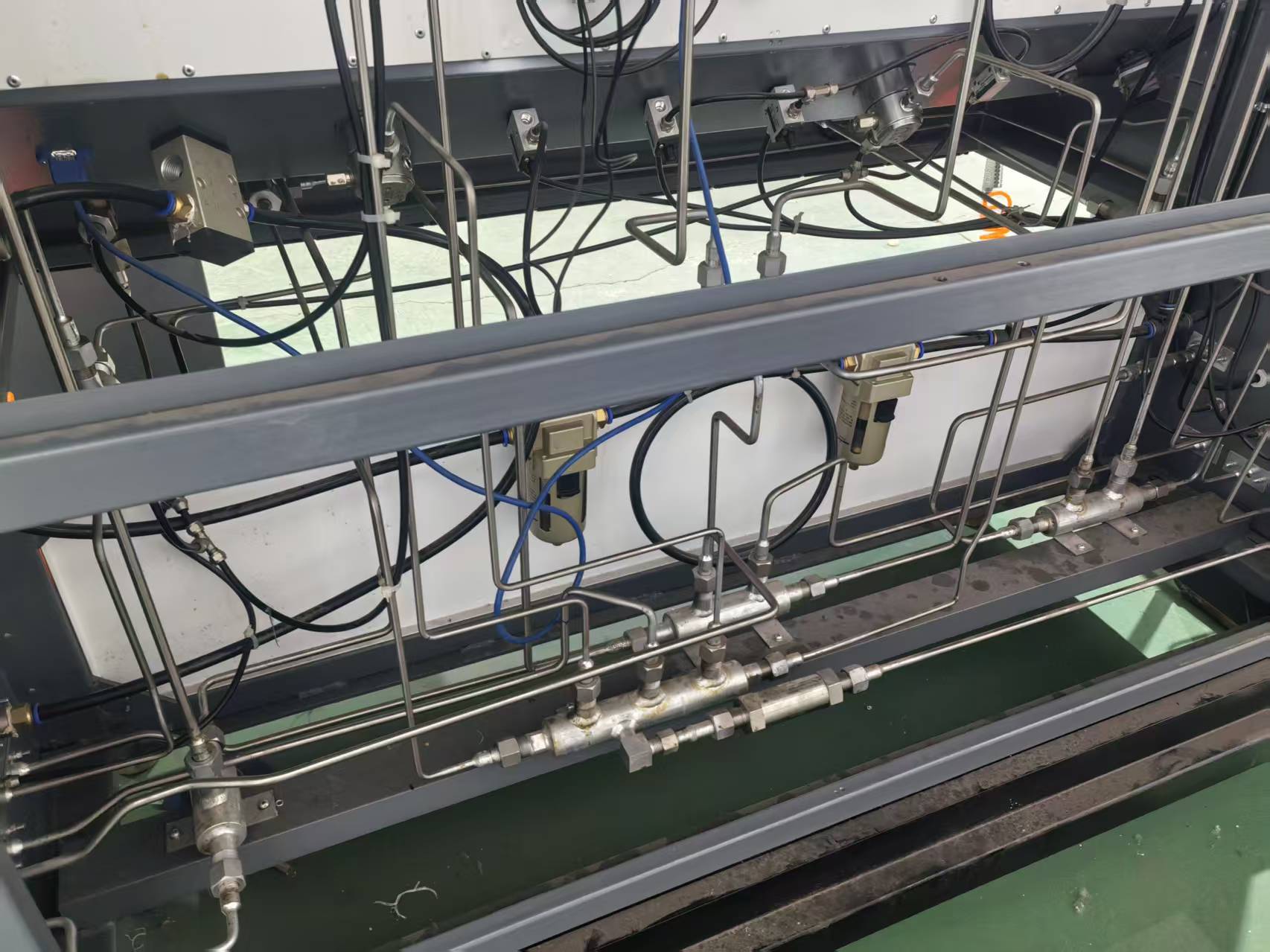
For the internal multi-channel gas circuit structure of the equipment, the engineer reorganized, repaired, and commissioned the stainless steel pipelines, fittings, control interfaces, and pressure transmission circuits, improving accessibility for future inspection, maintenance, and troubleshooting.
The equipment adopts a multi-channel gas circuit design. Different pipelines are responsible for gas source input, pressure transmission, test channel control, and pressure release. After long-term use, the piping layout, fitting connections, and selected control interfaces may affect future maintenance efficiency.
Based on the actual equipment structure, the engineer reorganized and commissioned the internal piping system on site, while confirming the condition of key connection points. The optimized piping layout makes it easier for the customer to conduct future inspection, maintenance, and component replacement, and also helps improve the long-term operating stability of the equipment.
Through this on-site maintenance and commissioning service, the customer’s existing safety valve gas test equipment was further optimized in terms of gas circuit layout, pressure monitoring, control operation, test fixture stability, and maintenance accessibility. After completion of the maintenance work, the equipment can continue to provide a more stable foundation for the customer’s future safety valve sealing performance testing and leakage rate inspection.
XIPUTEC will continue to support customers in fluid connection, industrial valve, and testing system applications by providing product supply, technical support, and on-site engineering services to help improve equipment reliability and on-site testing efficiency.